Showing posts with label game mechanics. Show all posts

Friday, March 11, 2011

Fighter Abilities, the Technical list

Fighters are exactly as the name implies. They can use any weapon and the heaviest armor. They can play defensibly or aggressively, and change abilities as a result. Fighters will have a “limit break” system. As the warriors deal and receive damage, they will increase their “limit bar.” This bar gradually increase as the fighter deals/takes damage. When that bar is full, they can perform certain limit breaks. Otherwise, the fighter abilities consume energy, which is replenished at a steady rate each round. Fighters will have three modes: Standard (the initial mode), Precision, and Bloodlust.
Martial
  1. Precision (mode)
    While in Precision mode, the fighter gains +x% to evade and +x to AR.

  2. Energy Surge (Limit Break, Buffer)
    Energy Surge performs a standard melee attack on one target. It also replenishes the fighter’s energy bar. The fighter will also receive the Energy Surge (buff) on himself. This Buff increases STR and WIL as well and gives +x% chance to Critical Strike and +x to AR.

    Energy Surge (buff) is a persistent buff.

  3. Gouge (debuffer)
    Gouge performs a standard melee attack with +x AR. It places the Gouge (debuff) on the target. Gouge (debuff) lowers the PRC. On the defending character. Gouge (debuff) is a persistent debuff. Gouge can be avoided by a block or evade.

  4. Nerve Strike (debuffer)
    Nerve Strike performs a standard Melee attack on one character to AR. On a successful hit, the target gets Nerve Strike (debuff). This debuff lowers DEX. Nerve Strike (debuff) is a persistent debuff. Nerve Strike can be avoided by a block or evade. Nerve Strike requires Precision mode.

  5. Smash armor (debuffer)
    Smash Armor performs a standard melee strike with 50% damage. On a hit, the target gets the Smash Armor (debuff). Smash Armor (debuff) lowers the DR by x. X depends on the type of armor of the target and the rank of Smash Armor. Smash Armor can be avoided by Evade, but not by block. Smash Armor (debuff) is persistent, stackable, debuff.

Guardian
  1. Counter Attack (passive)
    Counter Attack gives the warrior a +x% chance to perform a standard melee attack after getting attacked by a melee attack. Counter Attacks cannot be re-counted.

  2. Provoke (debuffer)
    Provoke causes the target to attack the fighter for the next round. It places the Provoked (debuff) on the target. It has no effect the current round. The attacker, if a player, may perform any ability as long as it targets the fighter who caused provoke.

    Provoke requires standard mode. It can be resisted by a saving throw.


  3. Blaze of Glory (Limit Break, Buffer, Debuffer)
    Blaze of Glory places the Blaze of Glory (buff) on the fighter. All enemies will receive the Blaze Provoked (debuff). Blaze of Glory (buff) increases the chance to Counter attack by x%, increases DR and AR. Characters with Blaze Provoke (debuff) must target the fighter each round. Players may still choose what ability to use. Blaze of Glory (buff) and Blaze Provoked (debuff) are persistent. Blaze Provoked (debuff) can be avoided by a saving throw. Blaze of Glory requires standard mode.
  4. Knock out Punch (debuffer)
    Knockout Punch performs a standard melee attack with +x AR. If successful, it places the Knock-out (debuff) on the target. This will interrupt spell casting, attacks, or any other action. Characters with the Knock-out (debuff) can perform no actions while under the debuff and are considered unconscious. Knock-out (debuff) is a persistent debuff.

  5. Rallying Cry (buffer)
    Rallying Cry places the rallying cry (buff) on all allies. Rallying cry (buff) increases AR and WIL. Rallying Cry (buff) is a persistent buff.


Rage
  1. Intimidating Shout
    Intimidating Shout places the Intimidated (debuff) on all enemies. Intimidated (debuff) lowers AR and gives –x to all saving throws. Intimidating Shout can be avoided by a saving throw. Intimidating Shout requires Bloodlust mode.


  2. Blood Lust (mode)
    Bloodlust increases AR, lowers DR, and increases WIL and STR.

  3. Heroic Strike

    Heroic Strike performs a standard melee attack with +x to AR. Damage is increased by X%.


  4. Savage Strikes (Limit Break)
    Savage Stirkes performs x standard melee attacks instead of the usual 1 per round. The fighter may choose multiple targets. Savage Strikes requires Bloodlust mode.

  5. Rend (debuffer, ddot)
    Rend performs a standard melee attack with +x AR. On a hit, it place the Rend (debuff) on the target. The target will continue to lose HP ddot for three rounds. Rend (debuff) is a persistent debuff.

Wednesday, March 2, 2011

Technical descriptions, technical terms.

Over the last few days, I've completed technical descriptions of each ability for Fighter, Paladin, Warlock, Mage, and Rogue.

I will be posting them in a few days, but for now I leave with only some terminology.

1. Buff/Debuffs These are ongoing attachments to a character that provide some benefit (such as increase in attributes) or harm (such as damage over time). If multiple Buff/Debuffs of the same type are cast on the same target from the same source, the last one cast takes over. Multiple buffs/debuffs of the same type may be present on the same target if they are from different casters. They are further qualified by the following.

a. Curse: this is a type of debuff. A single caster will have several different spells that will place their respective curses on an enemy. The caster can not place more than one curse on an enemy. If multiple are cast, the last one takes precedence. For instance a Warlock can caste "Curse of Torment" on one target. This same Warlock then casts "Curse of Fumbles" on the same target. "Curse of Torment" is replaced with "Curse of Fumbles." The only way to have more than one curse on a single target is if each curse was cast by a different caster.

Curses are harder to remove than...

b. Magical: Magical buff/debuffs can be removed relatively simply compared to others.

c. Poison: Normally cast by rogues, these debuffs cannot always be removed by the same abilities that remove magical debuffs/buffs.

d. Disease: The most difficult debuff to remove. It will require a potion or a very specific ability.

e. Blessing The beneficial flip side of curses. A single character can cast many types of blessings, but cannot place more than one blessing on an individual target. Last blessing cast replaces the previous buff.

f. Persistent buffs/debuffs that cannot be removed in anyway. These will normally have a short duration, such as the "afterburn" of a firespell.

g. Aura-effect Aura effects are buff/debuffs that cannot be removed and persist as long as the Aura-source is present. The most common Aura Source is a paladin Aura.

2. Modes Some classes can switch between two or more mutually exclusive modes. Characters can change mode once per round and will still be able to perform one other action. Modes fall into three categories.

a. Aura-source Paladins and Warlocks have auras. Auras place aura-effect buffs/debuffs on other characters. They cannot be removed as long as the Aura is present.

b. Forms Druids and Warlocks can change shape. They will gain modifications and access to certain abilities when they do.

c. Combat Style Warriors, Rogues, and Rangers can all change between modes that modify their combat abilities and make available certain abilities.

3. Spell Damage spell damage normally depends on the WIL of the caster. Certian spells have a chance to hit -just like normal melee strike- that depends on INT.

c. Direct Damage These are normally "bolts" of something that can be defended against with armor, dodge, or block just as if it was melee attack or a ranged attack. Damage reductions works the exact same way. The chance to hit is based on the caster's INT. The damage is based on the caster's WIL.

b. DOT Damage over time. This is a debuff that deals damage each round until removed or expired.

c. DDOT Diminishing damaging over time. This is a debuff that usually follows a direct damage spell. Ddot normally have a short duration and will continue to deal a fraction of the initial damage dealt (after it is reduced by armor). The first round might deal an addition 20%, then the next round 10% and disappear on the third.

Saturday, November 6, 2010

It has been to long: Chance to hit formulas

I realize that I have not been keeping up with updating this blog. A big part of that is that I am doing NaNoWriMo this months and the pages upon pages of writing have been going into that. Also, I have realized that what I really need to do is less public brainstorming and more privately designed and complete document so that I can put together some instructions for a BCP.

I have however created chance to hit formulas. This chance to hit formula will calculate both the chance to hit and the amount of damage "absorbed" by armor in one roll.

Some back ground first. Characters will have two relevant attributes when it comes to hitting and dealing damage. One attribute will be the damage multiplier and the other will be the attribute that affects the attack rating. The attack rating itself will be mathematically derived number that affects the chance to hit. What affects each of these will depend on the weapon used or the type of spell:
Projectile Spell = INT(attack rating); WIL(damage multiplier)
Mellee Weapon = DEX(attack rating); STR(Damage multiplier)
Ranged Weapon = DEX (attack rating): PRC(Damage Multiplier)


As mentioned in another blog the amount of damage is simply the base damage of weapon/spell (1-4 points) multiplied by the attribute. So if a character is striking with "rusty dagger" (1-2 base points) and has a STR of 9, then the range of damage is 9-18.

Now, the attack rating is also depended on an attribute. I don't know how that will be derived yet. I do think the average attack rating for a level one character should be about 10 and should double every ten levels, just like armor. Note, that I'm tied to the number 10, it can be 100 at level one, just as long as it doubles about every 10 levels. Additionally, the attack rating should be approximently equal to the average "heavy leather" armor rating. This is the second highest armor rating, with metal armor, on average, exceeding attack ratings.

If anyone has any ideas, please let me know.

The actual formula works like this. In order for a character to hit, there must be calculated a "full hit minimum" (FHM) number. The number will be within the range of 0-100, although it can exceed 100 in certain circumstances. It will be calculated according to this formula:
FHM == {[0.8a + (a-d) + (la-ld)]/a} * 100
a = attack rating
d = defender's armor
l = level of attacker and defender


If the defender and attacker have equivalent levels, and the attack rating and armor rating are the same, than the FHM == 80. Compare that to a random number 1-100. If the random number >= 80, than calculate full damage (base damage * damage multiplier.

Note, this is a pretty high bar. An attacker fighting an evenly matched defender, the attacker will deal full damage only 1 out of every 5 strikes. However, this is Full hit minimum. If the attacker is below the mininum he will not deal no damage, but will deal less damage:
If RND(1-100) is less than FHM by .1-10.0 then calculated damage * 80% ("partial hit")
If RND(1-100) is less than FHM by 10.1-20.0 then calculated damage * 60% ("weak hit")
If RND(1-100) is less than FHM by 20.1-30.0 then calculated damage * 40% ("glancing blow")
If RND(1-100) is less than FHM by 30.1-40.0 then calculate damage * 20% ("near miss")
If RND(1-100) is less than FHM by 40.1 or or more then calculate no damage ("complete miss")


So in combat between evenly matched characters, damage will be dealt to the defender about 60 percent of time (excluding calculations for evasion/blocking), and most of those hits will not be full 100% damage. In this way, the comparison between the armor rating and attack rating will cover both chance to hit and damage absorbed by armor. There will be no need have a separate formula for damage absorption.

An important question at this point is will players like hiting only 60% of the time, or will this generate more frustration than challenge? How often should players expect to hit an evenly matched opponent?

I plan to soon make a flow chart that will include evasion, block, critical hit, and so forth. Assuming that programmers like flow charts. :-)

Saturday, October 23, 2010

On the Prototype to be programmed

Once again, I think back to the blogs I have been writing and I realize that I am not the best communicator. The last couple blogs are like sketches of tiny pieces of a great technical schematic, with little mention of what the schematic is for. This blog is attempt to remedy that. To give some kind of goal to what all those little sketches are for. For the programmers, after reading this, all of you can mention off a complete, ideal, and clear list of details that you need before you start programming.

The very first thing to be programmed, tested, and got "right" is a basic combat protype. The goal of this is to get the heart of the game fluid, balanced, workable. This is where players will be spending most of their time. When we get this part right, a solid third of the work on the game will be complete.

GUIThe Basic Combat Prototype needs a very limited GUI. The GUI will be for testers to create and customize characters. There will need to be a character creation screen, and a combat screen. In the character creation testers can 1)set levels, class and race. 2)set the fab-five attributes 3)set armor/weapons appropriate to their level. Experience points are not needed for the basic combat prototype. In the combat screen, the testers will be able to see 1)their character's mana, health, attack and def ratings. 2)the same for their opponents. 3) Buffs and de-buffs on all characters. 4) a way to pick what actions the characters will do during the round of combat. 5) color coded text, at the end of combat, indicated combat resolution.

Remember, combat in this game is entirely turned based. Just like the squaresoft games. The important difference is that no selected action resolves until all characters have chosen an action for a particular round.

Classes The details of each class are yet to be determined. For the sake of the BCP, we will create Fighters, Rangers, Rouges, and Mages. The classes will relate to each other in rock-paper-scissors relationship. Fighters will have the advantage against Rangers, Rangers against Rouges, Rouges against mages, and mages against fighters.

Priests will be excluded for now since healing is an imbalancing force. Hybrid classes (Druid, Paladin etc) will also be introduced later.

Vanilla Abilities/Calcualtions. There will, of course, be vanilla abilities that are needed in combat. Here they are: Damage(melee weapon), chance to hit/crit(melee weapon), initiative, damage(ranged weapon), chance to hit/crit(ranged weapon), damage(spell), chance to hit/crit(spell), chance to evade, chance to block

How all of this is determined is the subject of another blog.

Special abilities These are the class specific abilities like a wizard spell or a heavy strike with a weapon. All of this will be determined later. These abilities are important because they will help determine how the classes have advantages on each other.

Weapons and Armor Levels will limit what types of weapons characters can use. Like wise with weapons. Armor will be classified as cloth, light leather, heavy leather, and metal. Armor will have a numerical rating. When the rating is compared in a ratio of cloth : light leather : heavy leather : metal will be 1 : 1.5 : 2 : 3. For instance, if a level 1 wizard has armor that gives him a rating of ~10, than a warrior (wearing metal) will have armor rating of ~30. Higher levels will have access to stronger and strong armor, but the rating will always be in the same ratio. Armor will affect 1)chance to hit, 2)damage absorbed.

Weapons will be much easier. Thing of D&D 2.0 rules. All weapons have damage, speed, and type. we don't even need to worry about type of damage. All we need to list is that "Long sword deals 1-8 base points of damage." The base is multiplied by a character attribute. This will be discussed in another blog.

Initiative This is probably the most tricky part of the Basic Combat Prototype. Initiative will *not* determine what order a player chooses what he will do in a around. Rather initiative will determine a chain of events that resolve at the end of a round of combat.

Initiative will be first decided by a random roll between 1-20. Higher numbers, mean that the character's actions resolve first. Weapon speeds subtract numbers. Casting time subtract numbers. Speed potions add numbers. Magical buffs add numbers. Here's an example of how it works:

GoodRouge1, GoodFighter1 and Goodfighter2 are in a battle with Evilmage1 Evilmage2 and Evilranger1. All characters choose actions:

Goodrouge1 -> Attack(Evilmage2)
GoodFighter1 -> Cast KnockOutPunch(EvilRanger1)
GoodFighter2 -> Attack(EvilMage2)

EvilMage1 -> Cast FrostBolt(Goodfigther2)
EvilMage2 -> Cast PoisonCloud(GoodRouge1)
EvilRanger1 -> Attack(Goodfighter2)


Now that every has chosen their action, initiative is decided. The order is based on random rolls, weapon speeds, and casting times. After the rolls are decided, the order looks like this:
1. GoodFighter1 -> Cast KnockOutPunch(EvilRanger1)
2. EvilMage1 -> Cast FrostBolt(Goodfigther2)
3. EvilRanger1 -> Attack(Goodfighter2)
4. GoodFighter2 -> Attack(EvilMage2)
5. Evil Mage 2 -> Cast PoisonCloud(GoodRouge1)
6. Goodrouge1 -> Attack(Evilmage2)


Each step fully resolve before the rest of the chain. So GoodFighter1 -> Cast KnockOutPunch(EvilRanger1) resolves first. The Knock Out punch suceeds. The ranger is now unconsious for x rounds, and his actions this round are negated. The order now looks like this:

1. GoodFighter1 -> Cast KnockOutPunch(EvilRanger1) (Resolved)
2. EvilMage1 -> Cast FrostBolt(Goodfigther2)
3. EvilRanger1 -> Attack(Goodfighter2) (negated)
4. GoodFighter2 -> Attack(EvilMage2)
5. EvilMage2 -> Cast PoisonCloud(GoodRouge1)
6. Goodrouge1 -> Attack(Evilmage2)


Evilmage1 now cast frost bolt. It succeeds. Frost bolt does damage, and addition subtracts from all initiate rolls. In this case, the subtraction from initiative rolls. In this case, the subtraction from Goodfighter2's roll is enough that his original roll is now lower Evilmage2's roll, but still higher than Goodrouge1's roll. The new order looks like this.

1. GoodFighter1 -> Cast KnockOutPunch(EvilRanger1) (Resolved)
2. EvilMage1 -> Cast FrostBolt(Goodfigther2) (Resolved)
3. EvilRanger1 -> Attack(Goodfighter2) (negated)
4. EvilMage2 -> Cast PoisonCloud(GoodRouge1)
5. GoodFighter2 -> Attack(EvilMage2)
6. Goodrouge1 -> Attack(Evilmage2)


Evilmage2 casts PoisonCloud. The Rouge happens to have an item that makes him immune to poison. It fails. The next order looks like this.


1. GoodFighter1 -> Cast KnockOutPunch(EvilRanger1) (Resolved)
2. EvilMage1 -> Cast FrostBolt(Goodfigther2) (Resolved)
3. EvilRanger1 -> Attack(Goodfighter2) (negated)
4. EvilMage2 -> Cast PoisonCloud(GoodRouge1) (resolved)
5. GoodFighter2 -> Attack(EvilMage2)
6. Goodrouge1 -> Attack(Evilmage2)


You can see how this goes on and on. Now, the players will never actually see all this text as the chain resolves. That is just for the computer to work out for programmers to conceptually understand. Instead, they will only see the final result at the end of the round. The final output of this round of combat will look like this:

Goodfighter1 knocks out Evilranger1! for 233pts of damage
Evilmage1 fires Frostbolt at Goodfighter2 for 140pts of frost damage.
Evilranger1 is unconscious.
Evilmage2 casts Poison Cloud on EvilRouge1! Target is immune!
GoodFighter2 attacks EvilMage2 for 430pts of damage!
Goodrouge1 attacks evilmage1 for 230pts of damage!


The numbers for damage here are arbitrarily chosen, as this example was only meant to show how end-of-round combat resolution works with initiative. After this output, the players will again choose what their characters will do.

Fluidity One of the most important things in BCP is a sense of fluidity. Have you ever played a game where your character's NEVER hit their targets, and combat moves at a slow pace? That's annoying. Players need to feel that they are getting somewhere in combat, espeically PvP combat. Thus, no matter what kind of math we do to come to calculate formulas, the following things should be true between evenly matched characters.
1. Two evenly matched fighters should land hits against each other approx 60% of the time. Before armor de-buffs are considered.
2. A mage, when casting spells that have a chance to hit, (Frostbolts, fire bolts, magic missles) should hit evenly matched warriors approx 60% of the time, before armor de-buffs are considered.
3. Stealthed Rouges should have only a 10% chance getting spotted by a opposing character if the rouge's DEX matches the opposing character's PRC and they are of equivalent level.
4. Spells that do not use chance to hit (spells that do not act like thrown projectiles, such as a sleep or fear spell) should only be resisted approx 10% of the time among evenly matched characters.
5. Dueling between two evenly matched characters should not last aprrox 5-9 rounds, before healing is considered.

Wow. This turned out a lot longer than I expected. My hope is that all of you reading this will have a better understanding of what I am going for. I really want to give anyone who writes the program of this exactly what they need in order to understand how this program will be developed.

The Basic Combat Prototype will eventually be used to test, tweak, and just balance in the game. Before that happens though, I ask anyone to email me a list of things they need in order to write an algorithm, and eventually a program, that can run this.

This is goal of everything else posted in the blog for now. Lots of brainstorming and such will have to take place, and lots of feedback from programmers is needed before I can write up a final document.

Sunday, October 10, 2010

Saving Thorws part II

Hello friends.

After much discussion with James Shewey, I feel that I need to do another post on game mechanics. Specifically "ability checks." The biggest challenge of this project is for me to really learn how to communicate, so I really value all the feedback I get from programmer types. There are few things that should bedisccued first. Here's the goes.

First terminology: what I am describing is no longer called an "ability check." Ability check will get to confusing. This will hence forth called "saving throws." This is because (as will become clear later) what the throw is against will be more important than what ability is used.

Secondly, all the saving throws are character versus character, rather than character versus environment. In this blog I am dealing with "saving throw to catch stealth" "saving throw to resist fear" "saving throw to escape entanglement" etc.

Third, there are goals. These are guidelines, for expected gameplay, that any way of setting up saving throws should conform to:
Guideline 1: If character is making a saving throw against an ability of another character of equivalent level and equivalent relevant attribute (str, prc, etc) than the chance of success should be about 8-10%. This is for sake of player enjoyment, and a sense of action in battle. Players will become frustrated if their abilities work only 50% of the time, or even fail 25% of the time. In sum: success of saving throws should be fairly rare among even matched characters.

Guideline 2: If the defender's level > attacker's level that should increase the chance of a successful saving throw. The inverse is also true.

Guideline 3: If the defender's ability > attacker's ability that should increase the chance of a successful saving throw. The inverse is also true.

Guideline 4: Unequal levels and unequal abilities will affect probability of a save, as above, but it should be very difficult for the probability to ever reach 1 or fall to 0. For instance a defending player is only two lower, and his ability is two lower, than he should still have a chance to save (though it will be lower than 10%). This is because of a bit challenge in game play: it should be hard to have your spells never fail or your defending player always resist.

Guideline 5: Items, buffs, may increase the chance of the saving throw, but not the ability that the saving throw uses.

Okay, so hopefully that should serve as a guide. Keep in mind, gameplay and good gameplay is the goal of all the game mechanics.

The basic function (object? class? I don't speak programmer) is a very simple formula:
Probability to save = (ad-p+b)/ad
ad = relevant ability of defending player.
p = the penalty. This must always be greater than 0.
b = the bonus to saving throw. This comes from equipment or spell buffs. The details of those things are for another blog.


The variable "a" will be whatever relevant ability is used in the saving throw. "p" is where all the work is done. How "p" is calculated will depend on the type of saving throw.

So the function for saving throw is (ad-p+b)/ad. What kind kind of saving throw determines both a and p.

So if the saving throw is "catch stealth" then:
p=sa+(aa-ad)+(la-ld)
a = defender or attackers ability
l = defender or attacker level
sa = stealth rating of attacker. How this will be calculated will be subject of another blog.


If the saving throw is "resist fear" then:
p=ma+(aa-ad)+(la-ld)
a = defender or attackers ability
l = defender or attacker level
ma = power of fear spell. Like stealth, how it is calculated will be for another blog.


Now right here, I think I need to slow down. I am not a programmer, and I need to explain my ideas to programmers.

So, am I on the right track? Is this way of handling saving throws making sense in programmer mindset?

Wednesday, October 6, 2010

Ability Checks... you know like a saving throw.

I've been lax in posting updates recently. I have been doing a lot of thinking. So much that's keeping me excited. There's been some things that I have had people help me work through. The question of abilities, I think is settled for now after much discussion with James and Stu. Here are the "fab five" attributes that all spells, hit points, mana points, and abilities will be based on:
Strength (Str)
Dexterity (Dex)
Perception (Prc)
Will Power (Wil)
Intelligence (Int)


Players rating can expect to vary between five to twenty.

The first thing I propose needs discussion is the ability checks. [i]Ability checks[/i], as the name implies an ability check is the chance to perform an ability. These might be spotting a thief, resisting a spell, climbing a wall, etc. All ability checks depend on one of the fab five attributes.

Rather than following the D&D d20 checkes, ability checks will be based on this formula:


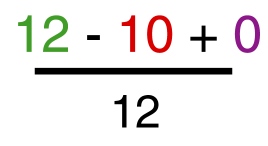
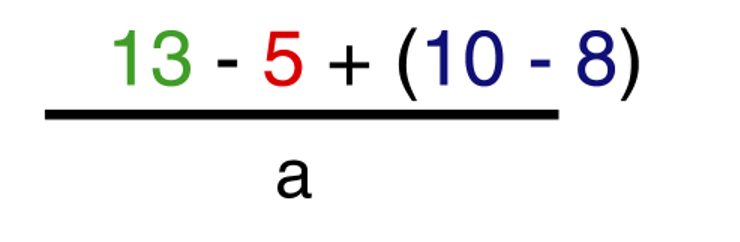
This very easily turns into a percentage. The numbers on the top -numerators for those of you remember math- is were all the work will be done. "a" will always be the player's attribute that is used for the check. The penalty, which will have to be at least '1' is the difficulty of the check. The higher the number, the greater the difficulty. The bonus, which will normally be zero, is something spell or item that gives the greater chance of sucess at this ability check ("break door") without affect the attribute that affects the particular check ("Str")

Example Galstaff, Sorcerer-of-Light, is trudging through a dungeon. He has a Perception (Prc) of 12 and is about to walk near a trap. Galstaff has no special equipment to catch traps. The trap is well hidden, so the penalty is 10. Galstaff's check to spot the trap is calculated like this:


Galstaff then has a 16.7 percent chance of spotting the trap. *Roll 2d10* Galstaff fails the check, springs the trap, and half a dozen scorpions fall comically on Galstaff, Sorcerer-of-Light's head.

The next Galstaff returns to the dungeon after learning a new spell called "foresight." Foresight gives Galstaff a +3 bonus to detect traps and stealth. Galstaff agains nears an undetected trap. This time his ability check looks like this.


Galstaff now has a 41.7 percent chance to detect the trap. *roll dice* Galstaff fails to detect the trap. He slips into pit trap, hurts his foot, and curses his crappy, public-school, magical education.


This is fairly simple check. This is a great way for an ability check is a character versus environment check. But in order to cover character versus character interaction, more things are needed. If defending player is attempting to resist or counter the ability of an opposing character, the difference between those two characters' level should be taken into account. Hence this formula:


Now obviously, when you calculate level-of-defender minus level-of-attacker you can get a negative number. The result then would be just further penalty.

Example He-man, a level 10 warrior, has Will Power of (Will) of 13. Skeletor, a level 8 Warlock, is attempting to cast "fear" on He-man. Skeletor is a half-wit wizard, so the penalty is only 5. The calculation is done this way:


He-man has a 76% chance of success. *roll dice* he does. Skeltor casts Fear on Cringer to feel better about himself.


A second character vs. character comparison is a comparison of the attributes of each character. The defending character is always the one who will make the check, but the following formula takes the difference between the defenders attribute and the attacker's attribute:


ExampleCheney, the hunter, has a Perception of 14 and is checking to catch a stealthed Rogue with a Dexterity of 17. (Since a rogue's stealth is depended on dexterity, that is that attribute compared) The penalty is 8. The forumla then looks like this:


Cheney has a 21.4 percent chance to notice the Rouge. *roll dice* fail. Cheney shoots a deer instead.


That then, is my introduction to Ability checks.

Concerns? Questions? Please, anyone who is confused, please let me know.

Friday, September 10, 2010

How To Divide up the Primary Stats?

Of all the pieces that make up an RPG, how one divides up stats, is probably the most fundamental. They affect everything from the power of abilities, to chances to hit, to whether or not the character gets some.

Character stats are also fundamental because from the most basics, (Strength, Dexeterity etc) one can automatically derive the other more secondary stats (Hit points, "saving throws," speed).

The challenge is to do the following things: 1)Divide the stats in a believable way because this contributes to immersion 2) Make the stats simple enough that they can be easily understood and adjusted because players want good gameplay 3) Bear in mind how the stats will affect spells and abilities in context of combat.

I submit here, for judgment of all of you, two paradigms of stats. The first is the familiar AD&D 2.0 that all of you are all probably familiar with:
Strength
Dexterity
Constitution
Intelligence
Wisdom
Charisma

This paradigm is familiar to all who have ever played an RPG. It is easy to adjust, to manage, and everyone will automatically assume which classes need what. There is no need to re-invent the wheel if the wheel is rolling just fine. There are however, two problems I see.

The first, is that there is no character stat for visual perception. If a hunter fires a bow, a thief spots a trap, or someone finds a secret door which stat best provides the bonus? Dexterity might work for the fist example, but what do you use for the other two? Wisdom maybe?

Secondly in covering "Wisdom" I have always thought that it covers to much. If I say, use wisdom to cover visual perception, it seems strange that I also use it to cover the resistance to a charm spell, the cleverness of a problem solving, or a the sheer will power to haggle for the right price. I have always thought that wisdom was a "catch all" for mental powers not included in intelligence.

There then, are two problems I see with the AD&D paradigm.

The second Paradigm comes from the game Arcanum. Arcanum has eight stats instead of six. There are four "physical stats" and four corresponding "mental stats." Here they are:
Physical Stats / Mental stats
Strength / Intelligence
Constitution / Will Power
Dexterity / Perception
Beauty / Charisma


I'm sure you can see some of the advantages to this paradigm. First, there is a visual perception stat. Secondly, even Beauty and Charisma are rightly divided. How often did you play a table top RPG and wonder if your character was attractive instead of just charismatic? If I were to ever table-top RPG again, I would want to play in a system that used these stats rather than AD&D stats.

There is perhaps a not so obvious down turn. Arcanum was a radically open world design. It was so "open" that there were not even character class. Your avatar became what you allotted the skill points to. This was great for creating original, unique, characters in a solo-RPG -and it would be a nightmare for PVP balance. Also, I can imagine how Charimsa might affect abilities (Paladin auras, for instance) but I see no place at all for physical beauty.

There are other paradigms out there. World of Warcraft, has its own workable paradigm. As do many other games. What must be decided here is what kind of paradigm would be best used in this game. Keep in mind that if this picked well, than all other stats can be derived from whatever primary stats are chosen.

That will keep it simple for players, as well as provide believable immersion.